

Species guideThe Wild.pet species guide
 Habitat: Rainforest / Forest
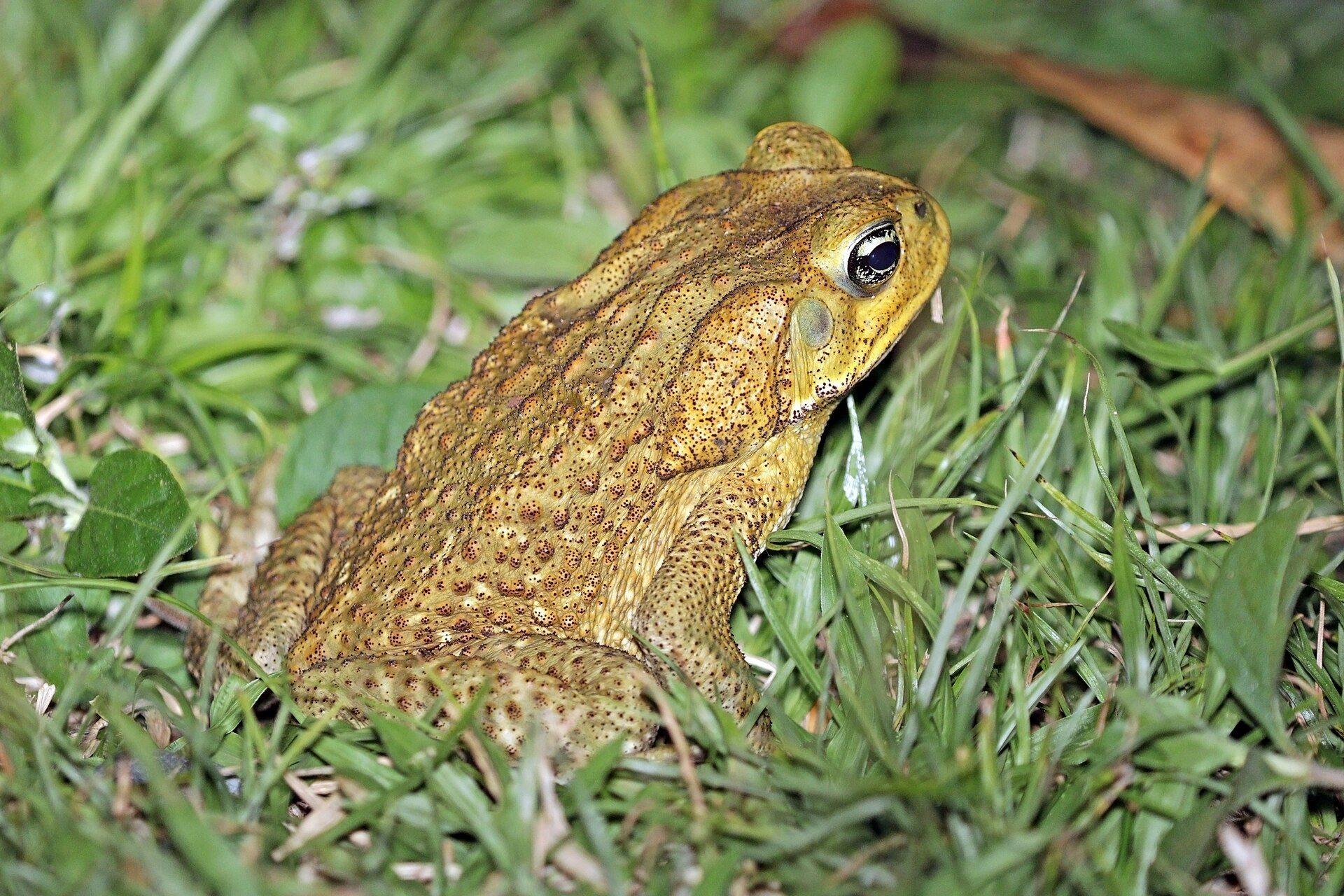
Photo: Charles J. Sharp, CC BY-SA 4.0, via Wikimedia Commons (resized)
Amphibian
Cane toad
IUCN Red List: Least concernRhinella marina
Warty. Poisonous. Invasive.
A huge, warty toad native from southern Texas to the Amazon, and one of the world's most damaging invasive animals.
Care & welfare
Specialist care, not domestication.
Space & enrichment
Needs a secure, escape-proof enclosure kept warm and damp. An escaped toad can poison pets and wildlife.
Diet & veterinary care
Eats insects and other small animals, and will even eat pet food. Wash your hands after any contact, because its skin poison can burn eyes.
A long-term responsibility
Cane toads can live about 10 years. A captured or unwanted toad must never be released somewhere new.
Know your state’s rules
Cane toad · Private pet ownership · 0 states researched
We haven’t researched any state’s law for this animal yet. That never means it’s legal.
City and county rules may be stricter. Contact your state wildlife agency before acquiring an animal. Never take wildlife from the wild.
Overview, not legal advice
Pet suitability
Expert onlyOverall difficulty: 2.6 out of 5 (higher is harder). How we rate
- Care difficulty3 out of 5
- Moderate
- Daily time and attention1 out of 5
- A few minutes a day
- Space2 out of 5
- A tank or small enclosure
- Environment3 out of 5
- Moderate
- Diet2 out of 5
- Simple, easy to buy
- Vet care3 out of 5
- Moderate
- Danger4 out of 5
- Can seriously injure people
- Lifespan commitment3 out of 5
- Moderate
- Yearly cost1 out of 5
- Low
- Welfare in captivity3 out of 5
- Moderate
Compare with another animalBefore you get one
Where it belongs
Scientists sort living things into groups inside groups. Here’s the cane toad’s place, from the biggest group to its own species.
- KingdomAnimalia · animals
- PhylumChordata · animals with a backbone or a rod like one
- ClassAmphibia · amphibians
- OrderAnura · frogs and toads
- FamilyBufonidae · true toads
- GenusRhinella · South American toads
- SpeciesRhinella marina · cane toad
Older books call it Bufo marinus.
Checked Nov 16, 2026 against ITIS report: Rhinella marina (TSN 773729) and Animal Diversity Web: Rhinella marina.
Quick facts
- Type
- Amphibian
- Size
- Usually 15–23 cm long
- Lifespan
- Up to about 10 years
Fun fact: A cane toad's poison comes from big glands behind its eyes, on its shoulders.
Where it lives in the wild
- South America (Brazil, Northern South America)
- North America (Mexico, Mexico and Central America, United States)
Introduced by people to: Australia
Habitat: Rainforest, Forest, Wetland
Conservation
IUCN Red List: Least Concern. This species is not currently threatened with extinction. It is not listed by CITES, the treaty that controls international wildlife trade.
Common and not threatened. In Australia, Florida, Hawaii and many Caribbean islands it is an invasive pest that harms native wildlife.
Before you get one
Check each need honestly before you decide. Scores run from 1 to 5; higher is harder.
Space
2 out of 51 is a tank or small enclosure; 5 is acres of land.
Read about space and enrichmentDiet
2 out of 51 is simple, easy to buy; 5 is complex, specialised or hard to source.
Read about diet and veterinary careVet care
3 out of 51 is most vets can help; 5 is very few specialist vets exist.
Read about diet and veterinary careDaily time and attention
1 out of 51 is a few minutes a day; 5 is hours every day; constant social needs.
See the pet suitability scoresLifespan commitment
3 out of 51 is a few years; 5 is decades; may outlive its owner.
Up to about 10 years
See the quick factsIs it legal where you live?
Pick your state in “Is it legal where I live?” to see the rule that applies there.
Is it legal where I live?
This is general guidance, not legal advice. Laws change, and cities and counties can add their own rules. Before getting any animal, check with your state wildlife agency, and if you're under 18, talk to a grown-up first.
Pick a state to see what applies there. Your choice stays on this device.
We haven't found a US federal rule about keeping this animal.
State rules
Researched so far in 0 of the 50 states and DC. Everywhere else shows “not yet researched”: that never means legal.
Protect the habitat. Respect the cane toad.
Keep a respectful distance. Never feed wildlife. Support local habitat restoration.
Check ownership lawsAnimals that share its home

Sources
- AmphibiaWeb: Rhinella marina (accessed 2026-11-16)
- Animal Diversity Web: Rhinella marina (accessed 2026-11-16)
- Florida Fish and Wildlife Conservation Commission: Cane toad (nonnative species) (accessed 2026-11-16)
- Animal Diversity Web: Rhinella marina (range) (accessed 2026-11-16)
- Florida Fish and Wildlife Conservation Commission: Cane toad (accessed 2026-11-16)
- Animal Diversity Web: Rhinella marina (lifespan and food) (accessed 2026-11-16)
- Florida Fish and Wildlife Conservation Commission: Cane toad (pets and rules) (accessed 2026-11-16)
Pet suitability scores are Wild.pet's own judgments. See how we rate.